Commentary: A police officer’s conundrum
Published 5:20 am Friday, February 20, 2026



The Alex Pretti scenario ought to be under serious consideration by the Oregon Legislature. Time is running out.
Pretti, as most of us know, was the ICU nurse (and U.S. citizen) shot to death on a Minneapolis street by federal immigration authorities. The incident exploded a powerful national discussion about the agencies’ activities.
With that in mind, consider this scenario, which a couple of years ago might have been fetched far, but no longer:
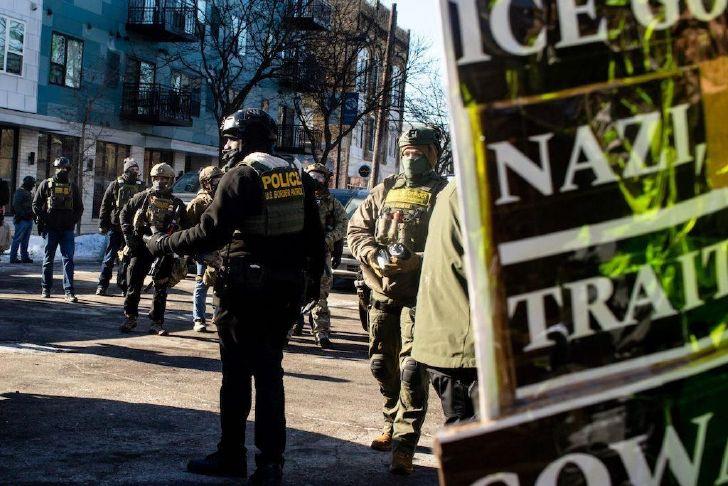
A local or state Oregon law enforcement officer — state police, county sheriff’s deputy, city police officer — arrives at a scene in which a federal official is beating an Oregonian, and appears to be on the edge of killing that person or inflicting permanent injury, despite no plausible threat to the officer.
What should this state or local officer do? What is his or her responsibility, to the people of the community and state and also to law enforcement?
Should the officer intervene and stop the violence? Stand by and watch? Offer to help the federal agents? Call dispatch and ask for instructions?
Oregonians might ask at that point, who will protect us if not local and state law enforcement?
Attorneys and many law officers may reasonably reply that law enforcement officers, no matter the often-used slogan of “to serve and protect,” have little legal obligation to do that, for all that may be the public’s (and taxpayers) expectations.
One legal analysis website, for example, points out that while many people believe police and other keepers of the peace are required to shield people from harm, “under the Due Process Clause of the Fourteenth Amendment, law enforcement agencies generally do not have a constitutional duty to protect individuals from the criminal acts of others.”
That’s not to say state and local officers and departments are unconcerned about safety. The Oregon City Police Department, for one example among many, declares itself “dedicated to the safety of our valued community.” Professional ethics as well as decency would push them toward protecting and serving.
But in the case of dealing with federal law agencies, it gets more complicated. The usual and normal relationship between local and federal enforcement agencies traditionally has been cooperative, which makes sense. But what happens if their interests collide — or if what the federal agents are doing specifically endangered the lives and safety of Oregonians?
The gap or even conflict between these ideas could create some real issues as the Department of Homeland Security expands, as it appears planning to do.
Today, this is a legal gray area. It hasn’t much emerged as a serious question until the last year, since up to then reports of federal officials inflicting that kind of questionable or extreme force, at least out in the open, have been relatively few. But such cases have appeared around the country, not least in Portland. More than a few people in Oregon law enforcement probably have nightmare thoughts about what might happen in their own communities.
The issue of how far Immigration and Customs Enforcement (ICE) and the Border Patrol may go, how much violence is allowed (under the Trump Administration) and under what conditions, and apparently unlimited immunity to consequences, seems to create a completely open question.
Courts have begun to address it to a limited degree. On Feb. 3, U.S. District Judge Michael H. Simon issued an order temporarily stopping ICE agents active at the agency’s Portland office from firing less-lethal munitions at nonviolent protesters, which included seniors and children.
State law is mostly silent in this area. The Oregon Legislature has only touched around the edges of some of the issues involved, mainly putting a little finer point on rules already in force.
A proposed constitutional amendment, Senate Joint Resolution 203 would require police officers to wear identification and not wear masks, but that’s already standard practice in Oregon anyway, and probably could not govern federal officers. A proposed law, House Bill 4138, would fill in some of those requirements.
Legislators are also at work on increasing the scope of Oregon’s “sanctuary laws” which limit state and local law agencies in their cooperation with ICE and related agencies. Rep. Kevin Mannix, R-Salem, is considering a change to sanctuary law which would open the door to more sharing of information with federal agencies in the cases of people convicted of serious misdemeanors and felonies.
None of that addresses how state law officers should react to apparent lawbreaking by federal officials. The job of answering that question would fall partly to local governments, but also to the Oregon Legislature. And it has little time left in this year’s short session to act before we all see what awaits in the rest of this year.
Randy Stapilus has researched and written about Northwest politics and issues since 1976 for a long list of newspapers and other publications. A former newspaper reporter and editor, and more recently an author and book publisher, he lives in Carlton.
This article was originally published by Oregon Capital Chronicle and used with permission. Oregon Capital Chronicle is part of States Newsroom and can be reached at info@oregoncapitalchronicle.com.